
"Santa Barbara"
400 article(s) found

Flavor Description of Honduran Coffee Bean Taste Manor Area Processing Method Grinding Scale Introduction
Honduras coffee production area is divided into six major production areas, located in the west and south, namely Santa Barbara, El Paraiso, Copan, La Paz, Comayagua and Olancho

Introduction to the regional treatment method for describing the flavor of coffee varieties in Santa Barara Manor, Honduras
For coffee production, the geographical conditions of Honduras are no less than those of its neighboring coffee-producing countries such as Guatemala and Nicaragua. There are 280000 hectares of coffee plantations in Honduras, mainly small coffee plantations, most of which are less than 3.5ha. These coffee plantations account for 60% of the total coffee production in Honduras. In the coffee garden, because the planting land belongs to

Taste and quality characteristics of Honduran Coffee Flavor description an introduction to the Manor by Grinding scale treatment
Honduras Coffee Flavor description, texture characteristics, Grinding scale treatment Manor introduction to the production of coffee, the geographical conditions of Honduras are no less than those of its neighboring coffee-producing countries such as Guatemala and Nicaragua. There are 280000 hectares of coffee plantations in Honduras, mainly small coffee plantations, most of which are less than 3.5ha.
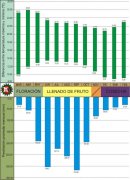
Geographical environment of Honduran coffee producing area in Central and South America cup test of Honduran coffee bean varieties
Honduran coffee has an excellent flavor. Caf de Honduras is synonymous with its people, traditions and living in harmony with the environment. Coffee production is a way of life for more than 100000 families who benefit from the production of this agricultural product. The vast majority of coffee produced in Honduras comes from 210 of the country's 298 municipalities and 15 of the 18 provinces.

Introduction to the flavor and taste of coffee manor in Honduras the characteristics of Honduran coffee in Santa Barara manor
For coffee production, the geographical conditions of Honduras are no less than those of its neighboring coffee-producing countries such as Guatemala and Nicaragua. There are 280000 hectares of coffee plantations in Honduras, mainly small coffee plantations, most of which are less than 3.5ha. These coffee plantations account for 60% of the total coffee production in Honduras. In the coffee garden, because the planting land belongs to

Honduran Taste Flavor Honduran Coffee Features
Professional barista exchanges, please pay attention to coffee workshop (Weixin Official Accounts cafe_style ) In Honduras, coffee producing areas are divided into six major producing areas, namely Santa Barbara, El Paraiso, Copan, La Paz, Comayagua and Olancho.

Introduction to Santa Barara Manor of Coffee Manor in Honduras
The current Constitution of Honduras entered into force on January 20, 1982. The Constitution stipulates that Honduras is Republican, democratic and representative. The National Assembly is the supreme legislature. The president is the head of state and government and the commander-in-chief of the armed forces, and is in charge of the executive power of the country. The Cabinet is the executive branch of the government, directly under the leadership of the President. [2] President Zelaya ignored the Supreme Court, the military and Congress

Introduction of climate-graded taste producing areas of Manor Coffee in Honduras
Following Cafe (official Wechat account vdailycom) found that Fairview Cafe opened a small shop of its own. Honduras is now the largest coffee producer in Central America, but little is known about how coffee got here. The quality of coffee in this area was first discussed in the literature in 1804, because coffee trees have to grow for several years to produce fruit.

The overall balanced flavor of Honduran Santa Barara coffee introduces the species of Honduran coffee beans.
Honduras is a mountainous country in Central and North America, with a population of more than 8.3 million and an area of about 112000 square kilometers. Located in the north of Central America. It is bordered by the Caribbean Sea to the north, the Gulf of Fonseca in the Pacific Ocean to the south, Nicaragua and El Salvador to the east and south, and Guatemala to the west. More than 3/4 of the territory are mountains and plateaus. The mountains extend from west to east, inland is a lava plateau, mountainous

Introduction of Old Pine Manor in La Paz District, Honduras Coffee Manor
Professional coffee knowledge exchange more coffee bean information please pay attention to the coffee workshop (Wechat official account cafe_style) Honduras has always been in the boutique coffee market in the top several, but Honduras has the advantages of natural environment, soil, altitude, climatic conditions are very good, neighboring Guatemala, El Salvador, Nicaragua, there are also advanced coffee production, Hongdu

A brief introduction to the treatment method of overall balanced Grinding degree and Baking degree of Santa Barara Coffee in Honduras
So there are two kinds of very good quality coffee produced in Honduras, one is the highland coffee grown at an altitude of 1000 to 1500 meters, and the other is the selected highland coffee growing at an altitude of 1500 to 2000 meters, which represents the highest level of selected highland coffee in Honduras. Most of them are exported to the United States and Germany. Although Honduran coffee does not have very distinct characteristics, but as a whole

Description of Coffee Flavor in Santa Barara Manor, Honduras; introduction to the taste characteristics of varieties of grinding degree
Although there are no distinct characteristics of Honduran coffee, its biggest feature is its rich and balanced taste as a whole. In detail, it has a medium or shallow acidity, which is obvious but not strong. Sometimes with slightly floral or fruity aromas (generally speaking, beans from different producing areas and different elevations have different flavors) slightly bitter and obviously sweet.

An introduction to the taste of coffee from Manor Santa Barara, Honduras with a hint of fruit.
In the 4th and 7th century, western Honduras was one of the centers of Mayan civilization. Columbus arrived in the Gulf Islands of Honduras in 1502, which was the beginning of Honduras's contact with Europe. Spanish troops began to conquer Honduras in 1524 and became a Spanish colony in the same year. In 1537-1539, Limpilla led 30,000 Indians in an uprising against Spanish colonial rule. 1539, Honduras

Are the western and southern parts of Honduras larger coffee producing areas?
The average planting height of Choluteca, Francisco Morazan, La Paz, Siguatepeque, Santa Barbara, Intibuca, Copan and Ocotepeque., is more than 1100 meters above sea level. Coffee varieties are 100% Arabica, 69% are HG, 12% are SHG,19% and CS.

Taste introduction to the roasting degree of coffee price in Santa Barara Manor, Honduras.
Honduras is a mountainous country in Central and North America, with a population of more than 8.3 million and an area of about 112000 square kilometers. Located in the north of Central America. It is bordered by the Caribbean Sea to the north, the Gulf of Fonseca in the Pacific Ocean to the south, Nicaragua and El Salvador to the east and south, and Guatemala to the west. More than 3/4 of the territory are mountains and plateaus. The mountains extend from west to east, inland is a lava plateau, mountainous
Introduction of Coffee Flavor description, Grinding characteristics and Variety producing areas in Santa Barara, Honduras
Honduras is a mountainous country in Central and North America, with a population of more than 8.3 million and an area of about 112000 square kilometers. Located in the north of Central America. It is bordered by the Caribbean Sea to the north, the Gulf of Fonseca in the Pacific Ocean to the south, Nicaragua and El Salvador to the east and south, and Guatemala to the west. More than 3/4 of the territory are mountains and plateaus. The mountains extend from west to east, inland is a lava plateau, mountainous

Introduction of coffee flavor and taste characteristics of Santa Barara Manor in Honduras with slight floral aroma
Honduras declared its independence on September 15, 1821, but was incorporated into the first Mexican Empire in 1822. He joined the Central American Union in 1823 and withdrew from the Central American Union in October 1838 to establish a republic. In 1840, with the support of Guatemalan dictator Rafael Carrera, conservative Francisco Ferreira established a dictatorship. After 1853, freedom in Honduras

Introduction to the flavor and taste characteristics of Honduran Coffee Santa Barara Manor
From its independence in 1821 to 1978, Honduras has had 139 coups, making it one of the countries with the most frequent coups in Latin America. Ramon Bilda Morales of the Liberal Party won the election in 1957 as president. Oswald Lopez Arellano, commander of the armed forces, launched a coup instigated by the United States in 1963, overthrew the Morales regime, and was elected general in 1965.

The overall balanced taste of Santa Barara Manor Coffee in Honduras is characterized by the characteristics of the variety producing area.
Honduras is a mountainous country in Central and North America, with a population of more than 8.3 million and an area of about 112000 square kilometers. Located in the north of Central America. It is bordered by the Caribbean Sea to the north, the Gulf of Fonseca in the Pacific Ocean to the south, Nicaragua and El Salvador to the east and south, and Guatemala to the west. More than 3/4 of the territory are mountains and plateaus. The mountains extend from west to east, inland is a lava plateau, mountainous

Introduction to the characteristics of coffee flavor and taste in Santa Barara Manor, Honduras, which is not strong in sour and bitterness.
Honduras is a mountainous country in Central and North America, with a population of more than 8.3 million and an area of about 112000 square kilometers. Located in the north of Central America. It is bordered by the Caribbean Sea to the north, the Gulf of Fonseca in the Pacific Ocean to the south, Nicaragua and El Salvador to the east and south, and Guatemala to the west. More than 3/4 of the territory are mountains and plateaus. The mountains extend from west to east, inland is a lava plateau, mountainous